

There is a reason Data is literally becoming the talk of every town in America. It has proven itself to be one of the most powerful tools in any arsenal. And while the massive increases in data center projects are controversial for many reasons including the nefarious uses of that data, when data is put to the correct use, its impact on your manufacturing operation can’t be ignored. Manufacturers are sitting on a gold mine of information from their machines, operators, ERP systems, supply chains, and production processes. The challenge is figuring out what data actually matters, how to collect it, and what to do with it once you have it.
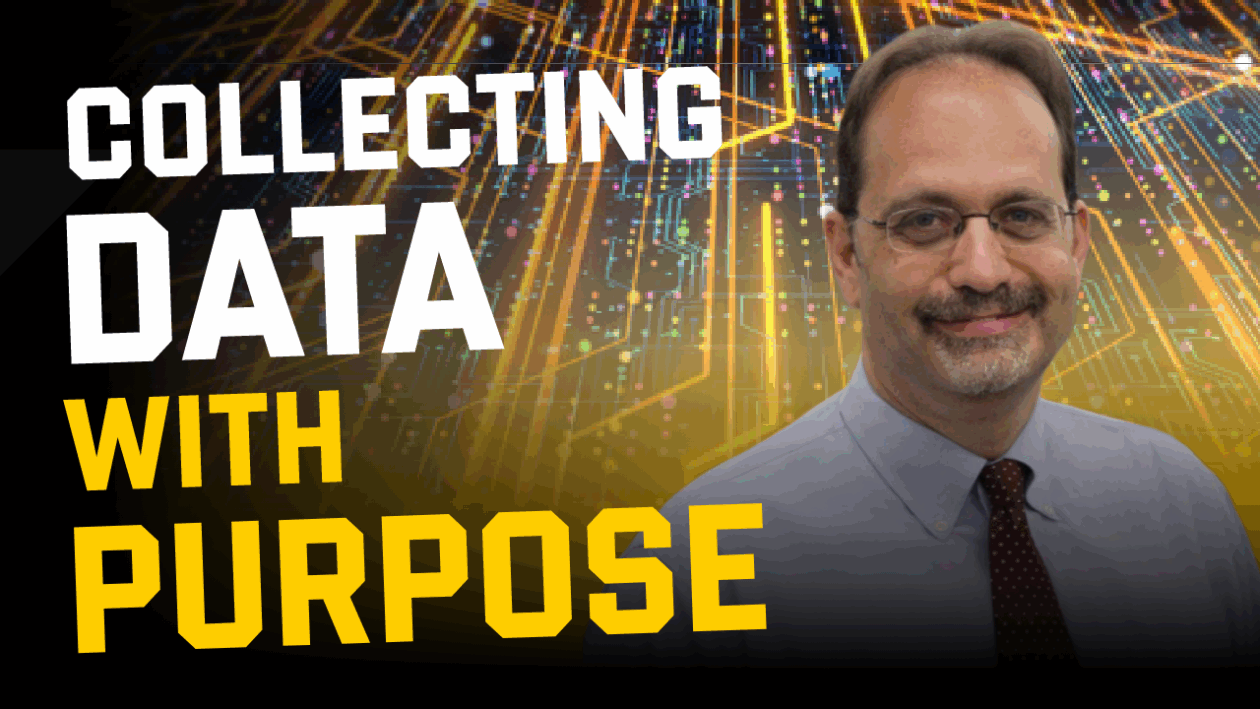
In this episode of Manufacturing Insiders, Nate Wheeler sits down with Tom Ferrucci, a Chief Information Officer at NATCO HOME with decades of experience connecting IT and Operational Technology in manufacturing. Tom explains how manufacturers can start turning their operations into a source of actionable data — even when they’re working with older, legacy equipment. We cover how to identify what data you actually need to collect, how to bring digital data collection to legacy manufacturing equipment, how to use ERP systems and data warehouses to centralize manufacturing data and build dashboards for operators, managers, and executives, why data quality and data governance matter more than simply having more data, and the increasing use of AI systems to quickly detect patterns, anomalies and insights hidden in data. One of the biggest takeaways from the conversation is simple: If your data is bad, better technology won’t fix the problem.
Watch the Interview on YouTube!
Interview Chapters
- 0:00 Introduction to Tom Ferrucci
- 3:00 Introduction to Natco
- 4:30 The Role of IT: Way Beyond Making Sure The Lights are On
- 8:10 Connecting Data Streams of Legacy and New Machines
- 12:50 How Small Shops Can Learn from Big IT Data Collection Operations
- 15:50 How to use Data Collection Systems
- 22:30 Why Microsoft Power BI is Natco’s Choice
- 24:30 The Growing Role of AI in these Systems
- 30:25 Addressing Common Pushback on the Value of Data
- 34:25 The Intersection of IT and OT Security Systems
- 39:50 CMNC and ISO Frameworks Can Help Your Data Implementation
Nate Wheeler is the owner of weCreate Web Design & Marketing, a nationally recognized marketing agency that helps manufacturers grow, save money, and become more efficient. Reach out to us below.
Nate (00:00)
Welcome to Manufacturing Insiders. Today I have Tom Ferrucci with me. He is the chief information officer for a 700 person manufacturer of rugs. And they make a lot of custom, cool prints. we actually were talking about, I think I got one of those in my in my living room. And so they do some very cool stuff. But one of the really cool things about Tom is he’s got kind of that cool intersection between business know how and and IT OT know-how. And so he adds a ton of value to his company and sort of outfitting their legacy machinery with tracking and sensors and ways that they can actually gain valuable insights from the manufacturing process and then put that into different sorts of ways of kind of parsing that data, AI being one of them and really gaining some valuable insights, you know, in increasing uptime, you know, increasing efficiency and things like that. Tom has a lot of accolades in the industry. He’s been in he’s been in IT for close to thirty-five years. he won a pretty prestigious award in Rhode Island for his you know for his contributions to IT and he sits on a number of boards and you know advisory committees related to IT. So just a wealth of information that I hope will bring some value to the manufacturing leaders that are listening today. So welcome welcome manufacturing manufacturing insiders Tom
Tom Ferrucci (01:27)
Nate, thank you very much. Really glad to be here. that was quite the introduction. but I appreciate you having me on as a guest.
Nate (01:34)
Yeah, for sure. So just give us a little bit more information about NATO, kind of you know, what you guys do and sort of the scope of operations.
Tom Ferrucci (01:43)
Yeah, sure. NACCO is a manufacturer of and importer of home decor, primarily flooring area rugs. That’s our main focus. we are headquartered here in West Warwick, Rhode Island. we do a little bit of light manufacturing and warehousing here. Our primary facilities for manufacturing are in Sanford, Maine, where we have some pretty high-end looms that manufacture some terrific you know woven product that we sell, you know, throughout, you know, various channels. We also have a very large presence down in Dalton, Georgia, which is the carpet capital of of the world. And we have we manufacture there as well other products you know again for a variety of different sales channels. and you know that’s our largest site in terms of both space and headcount, you know, with five different locations down in Dalton, you know, hundreds of employees down there. we do you know again a significant amount of manufacturing, but also importing and warehousing there as well. We have a a couple of smaller manufacturing and distribution operations out on the west coast as well that make products that are a little outside of the the area rugs, but they do go with other decor items. and when it comes to the importing and warehousing, again a lot of it is is area rugs and carpeting, and we also have another lines of other home decor items as well as you know, pillows, curtains, things of that nature that we distribute as well.
Nate (03:09)
Wow. Yeah, pretty complex operation. So with you being kind of, you know, at the top of the food chain there and you know, with regards to IT and the like, what what do kind of your roles and responsibilities involve on a day-to-day basis?
Tom Ferrucci (03:24)
Yeah, so you know, you’re right. It’s kind of overseeing all things technology here. So w it the areas that we really focus on obviously are you know, network infrastructure, security, making sure that all of our sites are, you know, up and running, the lights are on. That’s a pretty the basic function, making sure that everything’s functioning as needed in terms of the thing connectivity between all the sites, and you know, the security component of that that’s baked into everything that we do. The other you know, one of the other focus areas is the applications that we’re managing, whether it’s our ERP system, our warehouse management system, you know, HRIS systems, other applications that tie directly in or indirectly into our backend systems, that application group rolls up to meet as well. and then you know, other areas when it comes to data, data management, data quality for some reporting systems, business intelligence systems that we’re working through. And like everyone else, you know, we’re working on AI initiatives as well, trying to figure out strong use cases for us, but also putting up guardrails and policy and data classification so that we’re making sure that we are using it in the best way and the safest way possible for everyone involved.
Nate (04:33)
Gotcha. Okay. So is the you kind of, I guess, IT slash OT role, is that something that most companies r you know wrap into that, you know, IT manager, chief information officer role, or do you feel like companies put adequate focus on both sides of that?
Tom Ferrucci (04:53)
So I think it varies when you go from company to company. I think you know, and my last employer I spent twenty plus years, twenty three years in the automotive sector and you know, highly engineering driven companies. And I think the integration between IT and OT, the operational technology side of things was is pretty strong, right? I think working with those groups, they you know, we had s you know, solid back end systems, we had a lot of equipment on the floor that was newer that you could definitely talk to, you know, over the network and integration of those two systems I think was a key component. I think the automotive world is pretty technically advanced and they do you know require a lot of data. So that was that was a you know not an easy stretch, but I think that was a an area where the synergies between IT and OT were kind of built into the process. And I think we know we worked tightly with those engineering teams to integrate a lot of that. So I I you know that was defin definitely you know a strong area. You know, in the area I’m in now with the consumer package goods and and the you know home decor and the rugs, it was probably a little bit less so. So I’ve had to insert myself as much as I can into those operational technology areas and try to prove that hey, we’re starting to get more data, we can get better insights, better value with some of this and try to get some wins that way. So I again I think it it varies, you know, from company to company and maybe industry to industry on ones that are more adept or in tune with doing that, with other ones where you know, it it’s more of a a process to try to insert yourself and try to prove the value when you get all this data. Again, I I probably said it in other areas, the the the amount of data you can capture, you know, from the the the manufacturing floor, it’s a tidal wave of data, right? So you gotta know where to get to and you know we we wanna be able to leverage that. It’s it’s some of the best data we have in, you know, in in terms of how we manage our operations and efficiencies and materials. You know, it’s all all people processing systems and it’s all tied into that.
Nate (06:47)
Right, right. And that was one of the fascinating things that you know that stood out to me was sort of the ability to kind of build that data stream from the floor even when you don’t have super, super high-tech machinery. Because I from what I understand, you kind of omit you have some really high-tech machines, some legacy machines, and you gotta get data from both. You gotta know what’s going on, you know, with your operations. So tell me a little bit about how you take a legacy machine. Well, number one, what do you what do you want to measure? How do you know what you want to measure? And then how do you actually get that data?
Tom Ferrucci (07:27)
Great questions, right? So I think the w the question of what you want to measure really is being driven a lot by the operations team. What are their pain points? Where are their inefficiencies? What are the areas they’re trying to work on and improve, right? I think that’s that group that’s gonna be driving a lot of that. And you know, the way that we manage those processes is you know, it’s taking that deep dive, working with them and collaborating with them. And is it things, you know, like in historically I’ve I’ve worked with equipment that you know, knitters that would have certain sensors on them for certain things like needle brakes or yarn breaks or or things like that as we’re making some automotive interiors or here with the rugs and the sensors are not needed in that case because inherently within the equipment it will identify and and detect those kind of things. But in other areas, you know we we would say all right, some of the equipment’s a little bit older. So some of the insights that we need into the equipment, whether we need like a vibration sensor or a heat sensor or a camera to detect issues using the vision system you know would be deployed in certain key areas within the equipment and send the information back via wifi to a central controller which we would manage that data and be able to react on it in in a variety of different ways. One is just you know getting some insights as to the process. You know, we we were trying to automate things like operating efficiency, right? And trying to figure out the the best ways to to you know gain insights there. I think intuitively you know, the engineers that we have worked with in the past always measure operating efficiency and now we can get more precise with that with hopefully less effort. but also things like you know support cases though. You know on IT we have a help desk system when something happens to one of our end users. In operations and manufacturing they have a ticketing system for maintenance tickets. So we have a machine down for whatever reason. you know it would, you know, have an operator to work with the team to open a a maintenance ticket for whatever piece of equipment was not functioning and then you would have to have an engineer or a mechanic go and take a look at it, resolve the issue. And you know, I we would try to get to a point where some of the sensors were smart enough to detect a you know, certain things. It couldn’t detect everything, but certain things overheating, excessive vibration, you know, whatever. Again, that operations team was important and we got a stop on the machine, it would automatically open a ticket in a maintenance system saying machine ten is down for this reason and an alert will go out to a mechanic or maybe an escalation to an engineer. So the mitigation or the the lessening of the downtime was the objective there.
Nate (10:03)
Right, right. So would you reach out to the manufacturer of that machine or the OEM to determine what would be the r you know the right type of sensor? Or is there kind of like industry standard sensors for, you know, vibration and you know feed speed or whatever it might be?
Tom Ferrucci (10:21)
Yeah, I I think we always start with with the equipment manufacturer to see if they can offer some insights as to the best tools to use. Do they have something that they already have that other people have used to try to d detect some of these you know causes for downtime? and then if that’s not the case, we’ll be doing some investigation. And the operations teams I work with are always very strong. They always offer their opinions on this is, hey, a tool that could be used to detect this scenario, heat, vibration, moisture, whatever it is. And you know, we we’d work with them on that, you know. Those physical attributes you know and those things that can cause a downtime, you know, is their domain expertise is needed. And, you know, the communications piece and how it integrates to the network and our applications is our domain expertise. So I try to put the two of those together. But again, I think a lot of time you’re right, you’re starting with your original equipment manufacturer to try to understand what they can do for us already built into the system or maybe built into the system, but maybe there’s some licensing involved to unlock some of these features. Or does it have to be an external sensor or something additional that we had not yet integrated into the equipment?
Nate (11:27)
I see. Okay. one of the things I like to do on the podcast is kind of like think about the the lowest common denominator, like the the guy who isn’t really tracking anything and isn’t, you know, doesn’t really know what to do with the data, doesn’t really know what data to to collect. And you mentioned, you know, an important part of that process is kind of finding out what the problems are from the operations team, you know, whether that be your GM or whoever it might be, and and then, you know, turning those problems into you know technological solutions. So my question is, is do you have a formal process for eliciting that information? Like do you say every week we sit down and we talk about the issues in the factory, you know, what machines ran well, which processes program well and which ones didn’t and then kind of talk about how technology is going to fix that or or is there sort of a reporting scenario? How do you figure all that out?
Tom Ferrucci (12:26)
Yeah, I I think it varies again. I think you know in companies I work with that are more highly engineering driven, you would have that more formal structured process where you the you know the operations do group and the IT group and the other, you know, areas as well. We you know, I I’ve been involved in in organizations where it would almost be like a multiple, you know, two or three time a week stand up meeting where you would have, you know, operations, IT, human resources, finance involved. And we would discuss the operational issues that are associated with you know any manufacturing operations. Others, you know, yeah, here it kind of varies a little bit more. I think some of these are more ad hoc based on you know determination of where we’re seeing issues and problems. a lot of times we will take a look at what we’re being charged back for for quality issues potentially and saying, all right, well, you know, the common denominator there is dollars and the dollars that could be associated with poor quality or lost productivity, things like that. And you know, luckily we have the quality here is is fantastic. you know, the productivity and the operations efficiencies is very strong, but we can want to continue to improve and get stronger in those areas. So I I think it again it varies a little bit. but at its core, it really is working with that operations team. And you know, you kind of said something there at the lowest common denominator. How are they right now evaluating that data? I mean, it could be as simple as. They have a very simple process and they have an operator out there with a clipboard and a piece of paper and then someone aggregates that data into an Excel sheet and you know they’re th maybe it’s too much to capture at a certain point or maybe they want to gain some efficiencies. But then we’re having other areas where we are, you know, more integrated into the systems and we are capturing that data at a higher level and able to accumulate it and analyze it a little bit better. So it it it it varies. I think one of the key things is to let the operations team know that these are available tools that we can use to make their lives a little bit easier, and and simpler. And and again, prioritizing a lot of that stuff too. You know, we wanna make sure that we’re tackling the biggest issues first.
Nate (14:30)
Right. Yeah, and even if it is that kind of spreadsheet or you know, clipboard scenario, you know, that g it can be time consuming to gather that data you know, manually. And so there may be some ways to gather that information through sensors and allow that operator to focus on other potential areas of opportunity.
Tom Ferrucci (14:51)
That’s exactly right. Yeah. Yeah. I mean he may be going around every hour or every half hour to every piece of equipment and taking, you know, you know, metrics or or measurements off the system in in terms of, you know, output or, you know, whatever they’re measuring and if there is a an an an option to do that via a sensor or other tool, let’s let’s see what we can do to take care of it. I think, you know, you gotta be cognizant too if it’s cost effective. but I in a lot of cases these sensors can be relatively inexpensive and easy to deploy. but again it it it does take some planning involved, of course.
Nate (15:27)
Right. Okay. so then so so you start by gathering the data and then that needs to feed in into some sort of a system and then that’s then you need to do something with that information. So
Tom Ferrucci (15:38)
Mm.
Nate (15:39)
I guess talk about those next two steps in the process. Like once again, lowest common denominator, where should we be feeding this? What sort of a system does that go into? And then we can talk about kind of what you’re gonna do with the data afterwards.
Tom Ferrucci (15:51)
Yeah, yeah, that’s a great question. you know, so in the past I’ve done things where it would feed into an ERP system. and in a lot of these ERP systems you’ll have like a quality area where you can do quality collection plans. And those collection plans are in essence, you know, shells of forms and databases where you would define, you know, the fields that you need to measure, you know, what is the piece of equipment, you know, what’s date, time, what is the scenario that you measured, what’s the you know, the frequency or any other metrics associated with that. And you know, a lot of times that equipment has a a corresponding resource, say in a costing system. So that we can say, all right, hey, this mish piece of equipment that we just measured this quality issue on has a rate of X dollars per hour with an overhead rate of whatever percentage that you want to apply to it. So that integration between those types of systems was something that can be really be advantageous to you. So again, a lot of ERP systems are are you know, working with these collection areas and quality. if you don’t have something like that, again, you know, you can definitely build your own data warehouse to house that data and still create hooks into an ERP system. you know, if you’re looking at things like piece of equipment running and manufacturing orders that which you know has discrete items on there, you know, we can definitely pull attributes out of the ERP system related to that MO and related to that item. That we can use to help build out some of the reporting cases. So if you have a widget that you’re making that costs two cents an hour and it’s down for 10 minutes, or if you have something you’re making that cost $200 an hour and it’s you know down for longer, you can use those data points to prioritize where you’re gonna have those teams work. So there’s there’s definitely ways to to get to that data, multiple paths to get in there. and then and again it on the front end, right? What are you using for visualizations and reportings. Again, we have a series of visuals out on the manufacturing floor that really try to do it at different levels. Typically we do the visualizations at maybe three different levels. We may have ones in the manufacturing areas that are more granular down to like the item, the SKU, the you know, the level where the operator is working. We may have some for the management that would aggregate the data within the group that they’re managing, whether it’s a department or work group or cell that they’re managing. And then we may have one for the executive, which is more of an overview. but of course from that executive level you can drill down to the next level and then drill all the way down to that SKU level or whatever discrete level that you’re you’re measuring. So we we try to always you know build like that. That’s the best way we think of now. You know, you know, things can change, but that seems to be a pretty reasonable approach to me.
Nate (18:31)
Yeah, absolutely. definitely like best case scenario. so where are the gaps? You know, c you know, so I’m sure that these ERPs kind of have that visualization, some of them have the visualization functionality sort of built in, at least for kind of standardized things like, you know, uptime and you know, quality per machine, you know, tur you know, whatever downtime per machine, that sort of stuff. Where where have you found the gaps in some of that existing technology where maybe you decided to layer on an additional, you know, AI agent to parse that data further and give you a little bit more custom reporting?
Tom Ferrucci (19:10)
Yeah, I also I think you hit on one. I think the AI capabilities is you know, is still evolving within some of the solutions. So maybe you’re in in that area, at least right now we’re looking at best of breed, right? What tools are we using that can really help us? Whereas the ERP solution, maybe some of the tools are not where we pr need them to be precisely, but we may have some other tools that would work in that area. I think that’s that’s one thing. And I think the visualizations you’re talking about, right? I think. The systems that I’ve worked with in the past, they maybe do an adequate job to maybe below average job. So some tools specifically geared towards visualizations and driving the impact from a a visual that can say, wow, look at that outlier. That really you know draws your attention to that kind of thing. tools like for us, we we are heavily leveraged in Microsoft’s Power BI to do a lot of that. And we like that tool as of today. It’s a good tool for us. you know, and we’re trying to leverage in some of the AI capabilities there for you know not just the analytics but the way that they’re querying the data as well. I think that’s the next thing we’re we’re working on where you know the the typical user is usually pretty good within some of these reporting systems. The ability to slice or filter the data is pretty intuitive. They’re pretty good. But sometimes they may come across a scenario where you know it’s a more of a one-off request and while we have a lot of those data attributes at the do data warehouse level we maybe have not incorporated it into the way that we’re filtering or slicing the data, but we can still get to that. So, you know, using some some of the tools around the AI realm that maybe would give us insights into that. And again, if enough people ask that, we will definitely build some reporting around it. That’s that’s how it works. As
Nate (20:49)
Mm-hmm.
Tom Ferrucci (20:49)
we you know, we with a lot of that reporting we we come up with some core reports around operations, inventory, production, efficiency, on time delivery, things like that. But those things have continued to evolve as as people’s insights, you know, have well they become more inquisitive in looking for different insights.
Nate (21:07)
Right, right. Yeah, and I I can so are you saying that the the the the Microsoft tool that you mentioned, can you tell me one more time what that was? What’s the exact term?
Tom Ferrucci (21:17)
Sure. Well, definitely. We’re using Microsoft’s Power BI. so it
Nate (21:21)
Power BI.
Tom Ferrucci (21:22)
it’s kind of a front end to multiple data sources, right? So it definitely has some significant hooks into the data that’s coming out of our ERP system and our warehouse system.
Nate (21:32)
Okay.
Tom Ferrucci (21:33)
But we also tap into other data sources as well. a a good example would be outside of the manufacturing world, as we manage our supply chains, we do a significant amount of importing as well. So Wwe have systems that track all that from the supplier to our
Nate (21:49)
Right.
Tom Ferrucci (21:49)
warehouse or wherever it’s gonna end up. But that’s not the end of it. We also have integrations into the different systems where the s the ocean ports where manage their congestion. So if something is sitting, you know, if you get to say the port of Savannah, but there’s port congestion of four days, well you know that that ship that’s sitting out there with your container on it may not get to dock for four days. So even if the dates you know, a certain date. You may have to add four days onto that. We’ve also tapped into for some of our trucking, some open source weather. so that during certain times of the year as we are coordinating truckers in the Midwest and inclement weather comes up, we kind of use that to predict when when we should be or or model when we should be sending some of the transportation as well. So it has the nice part about the Microsoft Power BI is you can tap into a variety of different data sources that
Nate (22:38)
Okay.
Tom Ferrucci (22:38)
would be, you know, you and you aggregate that data together and you you get
Nate (22:42)
Yep.
Tom Ferrucci (22:42)
some pretty good insights.
Nate (22:44)
Yeah, that’s yeah, that’s so basically just so I can kind of like categorize so it would be just a visualization studio for multiple data sources. Is that kind of okay.
Tom Ferrucci (22:53)
Yep. At at its back end is a s you know a significant data warehouse, you know, we that we integrate into different data lakes, ERP, warehouse, other data sources, and that data
Nate (23:03)
Okay.
Tom Ferrucci (23:04)
warehouse that’s curated has a lot of insights that we build the visualizations around.
Nate (23:10)
And then do they have sort of like a co-pilot, you know, AI, you know, something you can query inside of that program to gotcha. Okay.
Tom Ferrucci (23:18)
That’s the part we’re working on. I think, yes, we’re that’s that’s the part where we think we can definitely get stronger. We have people that are very good users and other people that just want to know, hey, what was my sales to this customer Q one twenty twenty five versus twenty twenty six for this particular product line? You can definitely get there with the reporting that we have, but we’re trying to make it, you know, easier, a little more frictionless, right? So they can
Nate (23:40)
Yeah.
Tom Ferrucci (23:41)
the answer’s quicker.
Nate (23:41)
No, that’s I that’s so powerful. You know, because even like, you know, in in the web space, we use Google Analytics a lot. And and it’s a very tough platform to really be good at, you know, because there’s so much information you get, and then they want you to set like custom reports to find this particular piece. But they recently added functionality in there where you can just ask their AI bot, hey, you know, I noticed that there’s a traffic drop on this page and it started whenever. Can you like identify?
Any things that changed in that period and help me diagnose, and it’s like gives you really good answers, and I’m like, holy cow, this is so powerful. So
Tom Ferrucci (24:21)
Yeah, I, I agree. I, I think you know, those the ability to pick up, you know, anomalies or outliers or, you know, patterns, it’s it’s terrific at that. And I think, you know, the answers that we were getting six months or a year ago, they’re much stronger than they’re stronger now than the ones that we’re seeing. And obviously the trajectory is just heading that way. So it’s it’s interesting to think where we’ll be in six months, twelve months or even beyond that.
Nate (24:44)
Yeah. Yeah, absolutely. You know, I was kinda curious with as l you know, as long as you’ve been in the IT space, what’s the biggest difference between a decade ago and now? You know, would it be, I guess you could say, security risks because of more advanced, you know, you know, hacking techniques getting into your systems? Would it be you know the use of AI and the ability to get information like that? Like what do you what do you feel is like the biggest change?
Tom Ferrucci (25:13)
Yeah, so w can I answer all the above, but I I think there’s a couple of things like that. I think obviously the AI is the one that most people are gonna say now because in the last few years it’s just you know, g gone off the charts in terms of the amount of publicity and availability and the discussions around it. So that that’s definitely something that I would say that and and the security piece, right? I think everything we do has to have a security component baked into it and i, i, it can You know, the solutions that we look at or the systems that we run can be the most robust, can be the least expensive, can have the most functionality. But if they don’t have that security component baked into it, I really can’t do much with it. It’s gotta have all those things you know, working for it. So it’s something that’s viable for us to use. And you know, we re had l those areas that we always focus on, but we now we add on I AI on top of that. So
Look, it it’s gotta pass this strategic filter of having value and sustainability and you know functionality and security, but now it’s gotta have AI integration. If it doesn’t have any one of those components, it may not be something that we wanna look at. We may wanna say, you know what, this has some good f you know parts to it, but it’s not enough for us to be a sustainable tool because we need all of these things. I think the other one that we see, and this pr you know, probably going back a little bit more than ten years, but the ability to you know work from anywhere. You know, these platforms will work across, you know, desktop, mobile, tablet, you know, and you know, Wi-Fi, across any pl that’s a given right now. You you have to be able to get to these systems from anywhere. And especially in the operations area and the manufacturing area, right? You want to be able to get to something quickly from your mobile device and get an insight will you know, instead of walking back, you know, ten, fifteen minutes back to your office, get the insight while you’re right there while you’re looking at the equipment running.
Nate (26:58)
Right, right. What’s the one what’s the one thing if you could maybe a pet peeve you could call it, something that you wish, you know, CEOs or presidents of the company understood about what you do?
Tom Ferrucci (27:16)
I, I would say the criticality and importance of data. data is a golden eye, right? I think a and a lot of people are starting to realize that. But y the the people that we’re dealing with on a day to day basis there, we make great products, they look wonderful, they sell great in in the stores, but a lot of people here, you know, don’t necessarily touch the product, but they’re touching the data every day, right? And I think the the importance that we place on the data is definitely something that I, I consider to be critical. And I think that message is resonating. I think a lot of people start to see that now, but I still think even more, you know, traction needs to be getting in that area where data and not just the d availability of the data, but the completeness and the quality of the data, the data governance that goes into the framework of everything we’re using. again, I tell them I said, you know, if we can get the most robust, advanced, fastest tools in the world, and if our data quality is poor, I, I can get you an answer. It’s gonna be the wrong answer, but you get the answer quickly. but
Nate (28:16)
Right.
Tom Ferrucci (28:16)
you know, we we wanna make sure that and knowing nothing’s perfect, but again, you know, we want to be able to take that data governance framework and the ability to work with the users to and make them understand why it’s important where we may have an object where we’re putting attributes, say an item level, and there’s fifty different attributes we want to put in and only five of them are required, maybe an item and a description and a unit of measure. Well, if you know these other attributes, that’s valuable information. It may take you an extra minute or two to populate the critical attributes for us, but that’s gonna help us make decisions down the road where it whether it’s like the shape of a rug or color or the size or size is very we always have the size, but other attributes that can help us analyze the data even more granular is is critically important to us.
Nate (29:03)
Right, right. Yeah, and I you know, I think from a CEO standpoint, a lot of times the pushback might be, okay, so I’m gonna invest a lot of money into you know, the technology to track this information, and I guess I don’t really know what we’re gonna do with that information. Like, is it actually going to make an impact on the bottom line? You know, I I feel like that might be like a common hesitancy in tracking data. And I guess what would you say to that? I do you have some examples of like real-world scenarios where you identified a problem, started to track the data, came up with an impactful solution that, you know, that actually saved money or increased profitability.
Tom Ferrucci (29:51)
So yeah, we we can definitely go to one that probably the may maybe the best case scenario is going back to maybe how we deployed some sensors on some older pieces of equipment where typically if the product that was being manufactured and this was back when I was in the automotive space going back a few years, and if we had a product that was being knit that had poor quality, the knitter would continue to run in some cases, even if there was a certain like the camera system that was giving us the visuals that would in theory stop the machine. Well, before the sensor was there, it would continue to run until the operator noticed you had a problem with it and it would shut down the machine, which the operators
Nate (30:29)
Mm-hmm.
Tom Ferrucci (30:29)
were constantly checking, but they watched maybe eight or ten machines at once. So you may get a couple of minutes, you know, a couple hundred linear feet or maybe a thousand linear feet of scrap before the system was shut down. So the
Nate (30:40)
Right.
Tom Ferrucci (30:41)
metric there was we would shut down the system once a center once a sensor visually detected an anomaly with the product where it didn’t meet the spec. And it would shut it down pretty quickly. You would maybe produce fifty feet of scrap before it shut down the system. So we would go from maybe hundreds or a thousand linear feet of scrap down to fifty. So the measurable there was the amount of scrap generated shrunk.
Nate (31:02)
Right, right. Yeah, absolutely. What about in your current company? What I know you’ve outfitted some of these legacy machines with various sensors. maybe give me a like a specific scenario, you know, what was the problem, the solution, et cetera.
Tom Ferrucci (31:18)
Yeah, I think here, you know, we we we definitely see some equipment that we are working with, but it’s more on the like the setup side of things or the amount of time it takes to do changeovers and set ups. I think integrations between IT and O T. There are some tools. So here, the looms that we run and and the machines that we run are much bigger than when I was in the automotive industry. So the switchover can take days, weeks or longer. So I think the ability to manage that process is measurable too. you know, if you’re doing them less frequent changeovers or more efficient changeovers, I think that’s an area where the convergence between IT and OT has probably made a you know a difference here, using some tools to manage that process.
Nate (32:00)
Right, right. Yeah, that’s that’s that’s a pretty big changeover. And so I g I would imagine like AI might be helping with some of that too, because I always kind of visualize that as a use case, like you know, tracking the sales numbers and knowing what jobs are kind of coming into the queue, knowing how long it takes to change over a machine and like creating that perfect balance point of like we need to run a thousand units of this and then we’re gonna switch over and you know to the to the next scenario.
Tom Ferrucci (32:29)
Yeah, I I think for us it’s more of we are gonna run a thousand units of this and then we’re gonna run another thousand units of a different style, but it uses a very similar setup so we don’t have to do the changeovers, right? ‘Cause a changeover is a big deal and you know, making
Nate (32:38)
Yeah. Yep. Right.
Tom Ferrucci (32:41)
that happen. So we’re trying obviously you need to meet the customer demand, but if you can do it in a way that you are limiting the number of changeovers, that’s really you know, an effective u use of time.
Nate (32:57)
That makes a lot of sense. So talk to me a little bit about security. I know A lot of companies are putting effort into the IT security side of things. And you know, what I’ve been told, and you know, I’m not in a factory, so I I can’t say this from my own expertise, but it’s kind of what I’ve heard is that there’s not been as much focus on security in the OT side of things. You know, the you know, it maybe the PLCs on a machine or w whatever it might be like. Do you agree with that? Is that something you’re seeing in the space?
Tom Ferrucci (33:29)
Yeah, I I I think there is. I think, you know, the obviously the focus in a lot of what we deal with here is really on the the systems, you know, firewall servers, end user endpoint devices and so forth. And as you get out to the manufacturing floor, yeah, I again I think the the rationale there is in theory the threat vectors aren’t reaching those as much, but still, it’s an area that keeps you know, security keeps me up at night, you know, whether you you we’ve had issues that we’ve had to deal with in the past or what’s gonna happen in the future, it’s it’s always a concern. i the within the IT realm, you know, it’s easier for me to manage if we have, say, a a fleet of printers and the printer is more than 10 years old or we have a a number of printers and that printer no longer gets firmware updates, I can control deploying some new printers to that area, right? Whereas in the the realm of the manufacturing, I don’t necessarily have the control to say Place that loom with something else, we may say, let’s work with the supplier to update the the software on there to make sure that it’s current. you know, and that has risks too, right? Maybe there’s some function that we’re using that doesn’t work well is in you know with the with the new version. So I think you gotta be very careful there. but I think to me it’s just the continual communication of the message of security being you know baked into everything. We do kind of a weekly update to the entire company and it’s just some general IT things like here’s a helpful tip that someone provided that we want to share with everyone. Here’s you know, a general interest article that we wanna share with everyone about what’s coming at us. You know, maybe with within the Microsoft ecosystems they’re rolling out some new changes to Microsoft Teams. We’ll share that with everyone. but every week there’s also a security piece baked into it. So I think for me it’s just that constant communication is and on the security side of things and it hopefully gets the people in the operational technology side of things thinking about that as well.
Nate (35:26)
Right, right. Are there any I guess that kind of industry standard best practices that maybe you’ve come across due to some new security threats that you could share with, you know, some of the audience, you know, something that maybe they haven’t thought about?
Tom Ferrucci (35:41)
you know, it’s just evolving so rapidly, right? I think you know, we start the basics, right? you know, obviously managing all the security on our endpoints and making sure that everything’s up to date there. We do a significant amount of security awareness training with the entire group that’s mandatory. so you know, we I I think we cover a lot of the bases there and we try to keep it fresh and changed up as as much as we possibly can. you know, I I it just it’s a constant evolution of what we’re doing. So, you know, we you know, we have seen security you know, issues that have popped up in the past and now we need to pivot to take a look at something else. I think for us it’s just, you know, trying to manage the staying ahead of the curve, right? It’s it’s kind of a know, chasing your tail a little bit, just trying to continue to yeah, at least keep pace with the threat actors, that’s for sure.
Nate (36:29)
Right. Yeah, I mean that’s it’s the same way in anything related to technologies, it’s all evolving very quickly and you have to you have to be constantly learning to stay on top of this stuff. so do you have a third party company that kinda helps you manage security and you know,
Tom Ferrucci (36:51)
We do.
Nate (36:51)
or or is that something you do all internally?
Tom Ferrucci (36:53)
So we we were doing it internally for quite a while, but it it’s to the point where now we we definitely have a third party helping us manage that security because they can they can react, you know, much quicker than we can during off hours. they have the ability to do analyze, you know, significant amount of data with some of the tools they’re using. and they are integrated in you know into our system pretty you know, pretty well right now. We’re still, you know, w kind of fine tuning how how much they work with us, but I think at this point you need that managed security piece to help detect
Nate (37:26)
Right.
Tom Ferrucci (37:27)
that you know threat hunting and everything that go that goes along with the security component. it’s it’s it’s a big part of the job, right? And my team, y you could have them focus on security all day long and we you know, we still need to keep the lights on. We still need to grow the network. We still need to, you know, manage the the users system. So, you know, again, I think that that managed security piece is something that you know, when you go back a number of years, it wasn’t, you know, something we were doing, but it’s definitely something we need to do now and we are doing now.
Nate (37:59)
Okay. Yeah. Yeah, I’ve seen some manufacturers run into some pretty bad scenarios in the past couple of years. you know, whether it be sort of that ransomware or just various different hacking things, and it’s like it it
Tom Ferrucci (38:11)
You g you gotta be very careful. And again, hopefully your failover systems and backup systems are robust enough that you can recover from that, you know, pretty quickly. I think the average is you know, just doing some research on on like a ransomware scenario, twenty four days without systems, right? That’s that that would be very, very tough to manage that. Yeah.
Nate (38:30)
Devastating for a lot of companies. Yeah. Very interesting. Do you are you familiar with kind of like the CMMC standards?
Tom Ferrucci (38:41)
We, we are. I a I am familiar with them a bit. and we don’t really do any government work here, so that don’t necessarily apply. But I think, you know, w at its framework, whether it’s you know, CMMC framework or some of the NIST or some of the ISO frameworks, we don’t necessarily at this time have any compliance regulations that we have to meet, but they all are solid frameworks that we are building our security around.
Nate (39:05)
Right. Okay, that makes sense. Yeah, I always I I’ve always been kind of like looking for opportunities to help guide manufacturers into CMMC just ’cause I know it’s been kind of like one of those things that’s been kicked down the road over the past you know, probably decade. But I think now they’re really setting hard deadlines. Like if you’re working with the government you
Tom Ferrucci (39:25)
I was gonna say it was about a year, it was a year and a half or a little bit longer ago where they officially kicked it in. I know a few people that have been certified, and and they’re definitely doing work for the government. It’s it’s a it’s an intense process for for them to go through, but you know, it w for them it was worth it now in
Nate (39:39)
Yeah. Right.
Tom Ferrucci (39:41)
in terms of keeping that part of the business.
Nate (39:43)
Yeah, absolutely. Well, yeah, I mean great, great stuff you shared today. Really enjoyed it. you know, I think just reinforcing that message of data collection and doing something with that data. it was cool that you called out some some actual tools that maybe some people could look at to visualize that data. anything else that that you feel like we missed or that we should share?
Tom Ferrucci (40:06)
I mean, I think we covered a lot, but I think there’s there’s there’s a lot of different things that you know I would say one thing is just kind of leverage the tools that you have, right? Anything that you maybe you license for that you haven’t tapped into, you think that can help. A lot of times, you know, if you have a robust enough ERP system, there’s solutions in there that you know that are untapped or you have yet to really turn on or fully configure the right way. And you know, that that can be something, you know, that can be I don’t call it low hanging fruit ’cause they’re always tough things that can be tough to set up or configure, but once you get it to that point, they are all built around best practices. I would say try to start there and leverage those tools that you may already have in your toolkit.
Nate (40:46)
That’s great advice. Yeah, definitely. I could follow that advice as well.
Tom Ferrucci (40:50)
We we can from time to time too, you know. Sometimes like, we can look at another product, like, well let’s let’s see if the product we already owns can do that and a lot of times it can
Nate (40:57)
Right, exactly.
Tom Ferrucci (40:58)
get us where we want to go.
Nate (40:59)
Yep. Well great. Tom, really appreciate it. thanks a lot for joining today and thanks for all the information you shared.
Tom Ferrucci (41:07)
great. It was great to be on the the podcast, Nate. I really appreciate it. Thanks for letting me, you know, share my ideas and and you know, talk about some of the things that interest me a great deal. Thank you.
Nate (41:18)
Absolutely.