


An Overlooked Recruiting Solution for Manufacturing | Clay Martin – Isla Talent Recruiting
August 7, 2026
This will change the way you think about .
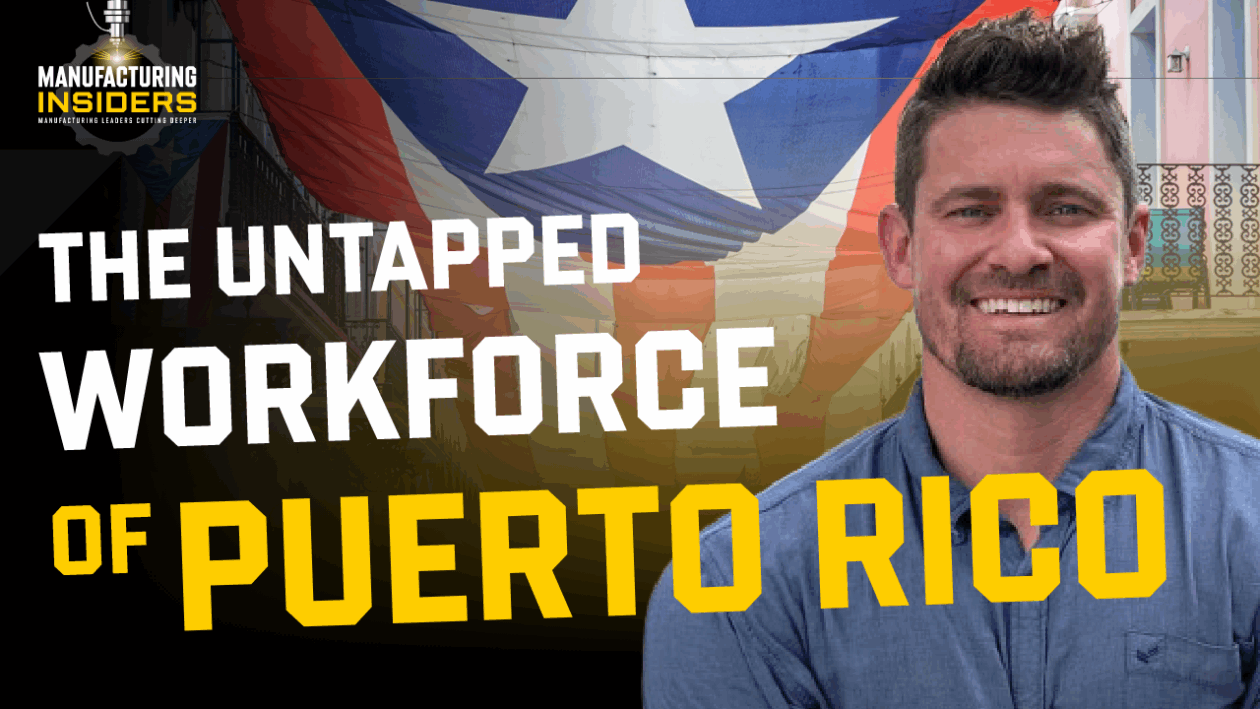
It’s no secret that manufacturers across many industries in the United States are struggling to find workers. But what if a significant workforce is already in the United States? In this episode of Manufacturing Insiders, Nate Wheeler sits down with Clay Martin, founder of Isla Talent Recruiting, to explore an unconventional approach to the manufacturing workforce shortage: recruiting workers from Puerto Rico. Because Puerto Rico is a U.S. territory, manufacturers can access this workforce without many of the visa and immigration complications associated with recruiting internationally, making it a way more appealing recruiting solution.
Clay explains how he connects manufacturers with workers looking for better opportunities, why many are willing to relocate, and how this approach can help companies break out of the revolving door of recruiting, hiring, and losing employees. But this isn’t a simple recruiting solution, and Clay is upfront about the challenges. Housing and transportation have to be addressed. Language barriers can require translation tools, bilingual employees, or other support. Manufacturers need to understand that recruiting workers from Puerto Rico is about more than filling a position — it requires companies to think differently about how they support and retain their workforce.
Clay also shares how he evaluates manufacturers before working with them, why company culture and how employees are treated matter, and why he has turned down potential clients who weren’t willing to take the “human aspect” of recruiting seriously. For manufacturers struggling with workforce shortages, this conversation offers a different question: What if the workforce you’re looking for isn’t overseas — but already belongs to America?
Read the interview analysis!
Nate Wheeler is the owner of weCreate Web Design & Marketing, a nationally recognized marketing agency that helps manufacturers grow, save money, and become more efficient.
Watch the Interview on YouTube!
Interview Chapters
- 0:00 Intro
- 1:15 Clay’s Mentorship Passion: Peace Corps to Business Owner
- 7:35 The Red Tape of the /H2-B Program
- 9:15 How He is Solving The Revolving Door
- 13:45 Walking Through the Process as a Business Owner
- 17:45 Many Ways to Address the Language Barrier
- 20:45 Success Relies on You: Good Business Practices
- 29:00 The Human Aspect of Good Business Practices
- 34:30 The Scale of Recruitment Many Aren’t Ready For
- 35:45 Final Questions
If you find value in this episode, make sure to like, subscribe, and follow along for more conversations like this!
Manufacturing Insights
1. Manufacturers can look beyond their local labor market
When manufacturers can’t find enough workers locally, expanding the geographic pool of potential employees can provide another option. Recruiting from Puerto Rico in particular gives manufacturers access to U.S. citizens who may be willing to relocate for better employment opportunities.
2. Recruiting from Puerto Rico avoids some of the complications associated with foreign-worker visa programs
Clay contrasts his approach with programs such as H-2B, which can involve lotteries, legal fees, uncertainty around timing, and workers being tied to a specific employer. Puerto Rico’s status as a U.S. territory means workers recruited there don’t require the same type of visa process. This is one of the most important practical distinctions for the article.
3. The value of this recruiting solution isn’t lower wages—it’s better retention
Clay specifically says that recruited workers are expected to receive a fair local wage. The potential economic benefit comes from reducing the repeated cost of recruiting for positions that continually turn over. When someone commits to Clay’s program, they commit to leaving their home in search of opportunity. Someone who is willing to leave their family and home already demonstrates higher commitment than the average person. That with other factors like there reliance on housing and transportation make them way more committed than local workers who can find new opportunities way easier, and will leave when they find themselves a better deal.
4. Relocation requires manufacturers to think beyond the traditional job offer
A manufacturer recruiting someone locally might only need to worry about wages, benefits, and the job itself. Recruiting workers from Puerto Rico introduces additional considerations such as:
- Housing
- Transportation
- Flights
- Language support
- Work schedules
- Job expectations
- Cultural adjustment
Clay emphasizes that these details need to be addressed before workers arrive and works through it with you.
5. Housing is one of the biggest logistical considerations
Manufacturers recruiting workers from Puerto Rico need to have a realistic housing plan. Clay describes housing as one of the first things he evaluates with potential clients because companies in smaller communities can have difficulty finding enough suitable housing.
6. Language barriers can be managed with planning and technology
A manufacturer doesn’t necessarily need an existing Spanish-speaking workforce to make this model work. Clay describes several approaches, including bilingual employees (which in many cases will arrive as part of the group of recruits), translation apps, translated materials, and hiring someone locally to provide Spanish-language support and teach them English.
7. The manufacturing workplace still has to be attractive
Recruiting workers from another location doesn’t solve a bad workplace. Clay says he evaluates potential clients based on compensation, benefits, location, housing, company culture, and—most importantly—the attitude of the employer toward its workers. He has declined to work with companies when he believed the employer wasn’t going to treat employees appropriately. That’s a particularly important broader lesson: recruiting can bring people through the door, but company culture determines whether they stay.
8. Retention requires manufacturers to treat employees as people, not just labor
The strongest example in the episode is a Cleveland manufacturer that initially lost several of its recruited workers. Instead of blaming the workers or the recruiter, the company asked what it could change. The employer continued working through the problems, eventually reaching a point where the entire group was working successfully and some employees are even considering bringing their families to the United States.
9. This recruiting solution can work for a variety of manufacturing roles
The recruiting model can cover entry-level production positions, machine operators, maintenance mechanics, HVAC, electricians, and other skilled trades. CNC operators are possible but more difficult to recruit because of the specialized experience required, and while Puerto Rico does have its own manufacturing industries, its rare that someone with such expertise needs to leave to find new opportunity.
10. Workforce problems often require a broader recruiting solution than simply posting more job openings
This is probably the biggest takeaway for manufacturers. If a company repeatedly posts jobs, attends job fairs, and runs recruiting campaigns, and struggles with employee retention, the answer may not be more recruiting. It may require expanding the geographic labor pool, improving the employment package, providing transportation or housing, improving workplace culture, or creating better support systems for new employees.